
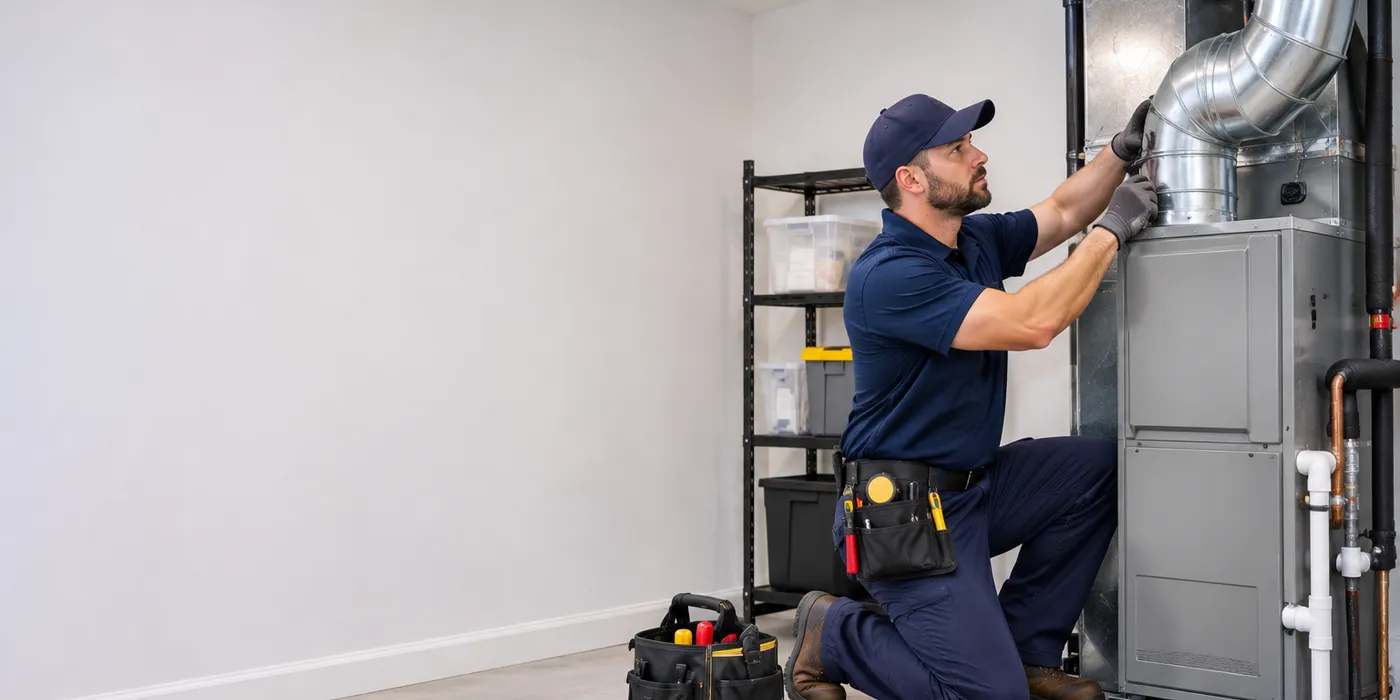
Air Conditioner Maintenance in Austin, TX
AC maintenance for filters, coils, drainage, airflow, and electrical components.
We hear “it just needs a tune-up” used for two different situations. One is a system that still cools the house but has been running longer, pushing less air through a hallway vent, or has not had its filter and coils checked for a season. The other is an air conditioner that starts, blows air, and yet leaves a bedroom warm while the thermostat keeps calling for cooling. We handle both situations, but the inspection starts in different places.
We check the indoor air handler, outdoor condenser, return grille, supply vents, filter rack, drain pan, and thermostat operation to work out whether the issue is ordinary upkeep or a developing component fault. A dirty filter can make a blower work harder, while a weak capacitor, dirty condenser coil, blocked drain line, or loose electrical connection can produce similar comfort complaints from the hallway.
Routine maintenance can usually be planned before the hottest stretch of weather, especially when the unit is cooling normally and the drain pan is dry. A system with warm air, weak airflow, water near the indoor cabinet, ice on the refrigerant line, or repeated cycling should not be left in that condition, because restricted airflow and poor heat transfer can place extra load on the compressor and allow condensate to escape the pan.
Warm rooms and musty odors
We often get calls for a warm upstairs room, air that feels weaker at one vent, a musty smell when the blower starts, or water showing beneath the indoor air handler. A room can also feel uneven when a return grille is blocked, a filter is loaded with dust, a supply register is closed, or a blower wheel has collected debris. Those conditions are worth checking before they turn into a no-cooling call.
A musty odor may come from moisture around the evaporator coil, a wet drain pan, biological buildup in the condensate path, or a filter that has held damp dust. Water by the cabinet may point to a clogged drain, a cracked pan, poor drain pitch, or ice that has melted after an airflow problem. A buzzing sound at the condenser can involve a contactor, capacitor, fan motor, or a loose electrical connection, while a clicking thermostat may be a separate control issue.
These symptoms can overlap from inside the house, but the cause changes the work involved. We inspect the specific filter, coil, drain, motor, and electrical part behind the complaint so that a simple cleaning is not treated like a failing component, and a worn component is not mistaken for a routine filter change.
Maintenance inspection visit
During a maintenance inspection, we begin with the thermostat, return air path, filter compartment, and supply vents, then examine the indoor cabinet and outdoor condenser. We check the filter size and condition, look over the evaporator and condenser coils, inspect the condensate pan and drain connection, and test the blower, condenser fan, contactor, capacitor, wiring, and disconnect. We also measure the temperature difference between return and supply air and compare operating readings with the equipment’s condition and manufacturer guidance.
A filter and basic electrical check may take 15 to 30 minutes, while coil access, drain flushing, cabinet cleaning, and a full operational test add time. We do not judge refrigerant charge from one gauge reading alone, because pressure changes with the refrigerant type, outdoor temperature, indoor load, and airflow across the coil. If the system shows signs of a leak or another fault outside normal maintenance, we explain what the readings indicate and whether a separate repair visit is needed.
We can usually clean accessible components, clear light debris, flush the condensate path, tighten accessible electrical connections, and replace a disposable filter when the correct size is available and approved. A damaged blower motor, leaking coil, failed control board, or part that must be ordered is normally scheduled as follow-up work so the correct component can be matched to the model number.
Coil access and aging parts
The condition and age of the equipment matter because an older capacitor, contactor, fan motor, or blower assembly may show wear that a newer unit does not. A maintenance visit focused on a clean filter rack and accessible drain connection is different from one where the indoor coil is buried behind panels, the outdoor cabinet has corrosion, or electrical fasteners have seized. We inspect those access points before assuming how much cleaning or disassembly the unit needs.
Coil access is another major factor. A condenser coil that can be reached through removable panels is simpler to clean than an evaporator coil behind a tightly installed air handler, duct transition, or attic platform. Restricted attic space, blocked equipment closets, and outdoor units surrounded by shrubs can all add preparation and cleanup work around the cabinet.
Parts availability also changes the scope when maintenance uncovers a weak capacitor, damaged contactor, worn motor, or cracked drain pan. If the exact component is stocked and the equipment is accessible, the work may be completed during the visit after approval; if the model requires a specific part, we arrange a return visit once that part is available.
Model plate and filter
Before calling, look for the model and serial number on the data plate of the outdoor condenser or the label inside the indoor air handler cabinet. Tell us the filter dimensions printed on the filter frame, such as the width, height, and thickness, and whether the filter is located in a hallway return grille or beside the indoor unit.
It also helps to know which room stays warm, whether water is present near the air handler, and whether the system is running, cycling, or shut off. Let us know if the equipment is in an attic, closet, garage, roof area, or behind a locked gate so we can plan access to the cabinet and condenser.
Call Austin Air Conditioning Solutions at (469) 771-1630 with the model plate and filter size; a clogged filter or dirty coil left in place can continue reducing airflow and increase strain on the compressor.
Hours of operation
| Monday | Open 24 hours |
| Tuesday | Open 24 hours |
| Wednesday | Open 24 hours |
| Thursday | Open 24 hours |
| Friday | Open 24 hours |
| Saturday | Open 24 hours |
| Sunday | Open 24 hours |
Not what you were after? Go back to the home page or thermostat repair.