Furnace Repair in Austin, TX
We diagnose furnace no-heat, cycling, ignition, and blower faults across Austin.
Across Austin, Rollingwood, West Lake Hills, and Lost Creek, furnace problems often show up in homes where the heating equipment has sat unused through long stretches of warm weather. Older split systems may have a worn igniter, dirty flame sensor, tired blower capacitor, or a control board that fails only when the thermostat first calls for heat. A furnace in a hall closet, garage, attic, or utility room can also collect dust around the filter rack and blower wheel while it is off.
We also see heating faults in newer homes with high-efficiency furnaces, especially where a condensate drain, intake pipe, vent pipe, or pressure switch is affected by debris or moisture. The thermostat may appear to work, the blower may start, and then the burners may not light or the furnace may shut down before the rooms warm up. We trace the sequence from the thermostat call through the safety controls rather than treating every no-heat problem as the same repair.
A furnace that is still heating normally but making a new noise can sometimes be scheduled before the next cold spell. A furnace with no heat, repeated shutdowns, a burning electrical smell, a gas smell, or a carbon monoxide alarm should not wait, because ignition, venting, electrical, and overheating faults can worsen while the unit continues trying to run.
No heat or burning smell
When customers call us, they commonly describe a furnace that is blowing cold air, clicking but not starting, turning on and off every few minutes, or making a loud bang when the burners light. A furnace that runs the blower without producing heat may have an ignition, flame-sensing, limit-switch, or control problem. Clicking can point to an igniter attempting to start, while a bang at ignition can involve delayed burner ignition or burner debris that needs direct inspection.
A burning smell can be dust on the heat exchanger or burner area after a long idle period, but a sharp electrical smell near the blower compartment, wiring, capacitor, or control board needs a closer check. We also hear reports of a furnace that starts normally but shuts off before the living room reaches the thermostat setting; restricted airflow, a dirty filter, a weak blower, or a safety switch can each produce that symptom. These signs can sound alike from the hallway, but the failed part, labor involved, and repair scope are different once we test the furnace.
Furnace diagnostic call
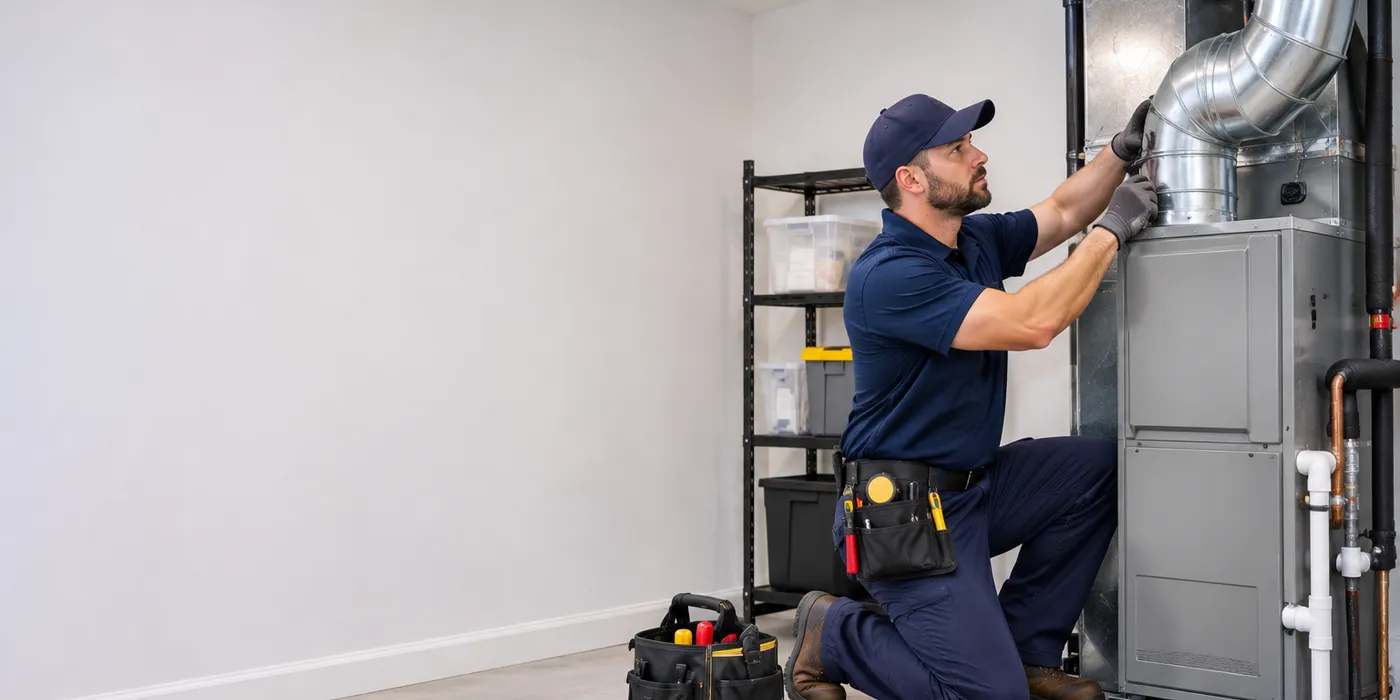
On a furnace diagnostic call, we begin at the thermostat and electrical disconnect, then inspect the filter, cabinet panels, blower compartment, burner assembly, ignition sequence, safety switches, and visible venting. We check the twenty-four-volt control circuit, line voltage where applicable, furnace fault codes, temperature rise across the supply and return air, and airflow conditions at the blower. For a gas furnace, we also inspect the flame pattern, flame sensor response, vent connection, condensate drain on condensing equipment, and gas components that are accessible for safe testing.
Initial testing commonly takes thirty to sixty minutes, although an intermittent shutdown or attic installation can take longer to isolate. When the fault is clear and the needed part is available, we can often complete items such as a flame-sensor cleaning, igniter replacement, fuse replacement, capacitor replacement, wiring repair, or filter-related airflow correction during the same visit. A model-specific control board, blower motor, inducer motor, gas valve, heat exchanger issue, or vent-pipe correction may need a return visit after the correct part is sourced or any required approval is arranged.
Control boards, heat exchangers, attic access
The furnace age and the failed component are major drivers of the repair scope. An igniter, flame sensor, loose wire, or accessible capacitor usually involves a more direct repair than a model-specific control board, inducer assembly, blower motor, gas valve, or heat exchanger concern. Older furnace cabinets can also have discontinued parts, previous wiring changes, corroded terminals, or a rating plate that must be matched carefully before a replacement is ordered.
Access changes the labor involved as well. A furnace in a clear utility closet is different from a cabinet above a garage ceiling, behind stored items, or in a hot attic with a narrow hatch and limited service space. If a gas shutoff valve has seized, a vent connection needs correction, or gas piping work requires a permit or local sign-off, the repair can extend beyond the original failed part. An accessible unit with an in-stock component generally falls toward the simpler end of the work, while ordered parts, restricted access, and safety-related corrections add steps.
Model plate and furnace location
Before calling, we ask that you locate the furnace model number and serial number on the rating plate, usually on the cabinet behind an access panel or on an exterior equipment label. Tell us which room is cold, whether the thermostat screen is on, and whether the blower, burners, or inducer fan runs before the furnace stops. If you can safely observe the unit, note any blinking fault light, clicking, banging, water near the cabinet, or smell from the burner area without removing sealed panels.
It also helps to know the approximate age of the furnace and whether it is in an attic, closet, garage, crawlspace, or mechanical room, since the access route affects the tools and replacement parts we prepare. Keep the area around the cabinet clear and do not continue running the furnace if there is a gas smell, smoke, or a carbon monoxide alarm. Call us at (469) 771-1630, because repeated limit-switch shutdowns from restricted airflow can strain the blower and heat exchanger if the furnace is left cycling.
Hours of operation
| Monday | Open 24 hours |
| Tuesday | Open 24 hours |
| Wednesday | Open 24 hours |
| Thursday | Open 24 hours |
| Friday | Open 24 hours |
| Saturday | Open 24 hours |
| Sunday | Open 24 hours |
Not what you were after? Go back to the home page or get in touch.